
Thermals in elk country
The elk already passed this class. You are the one climbing with yesterday’s wind still in your head.
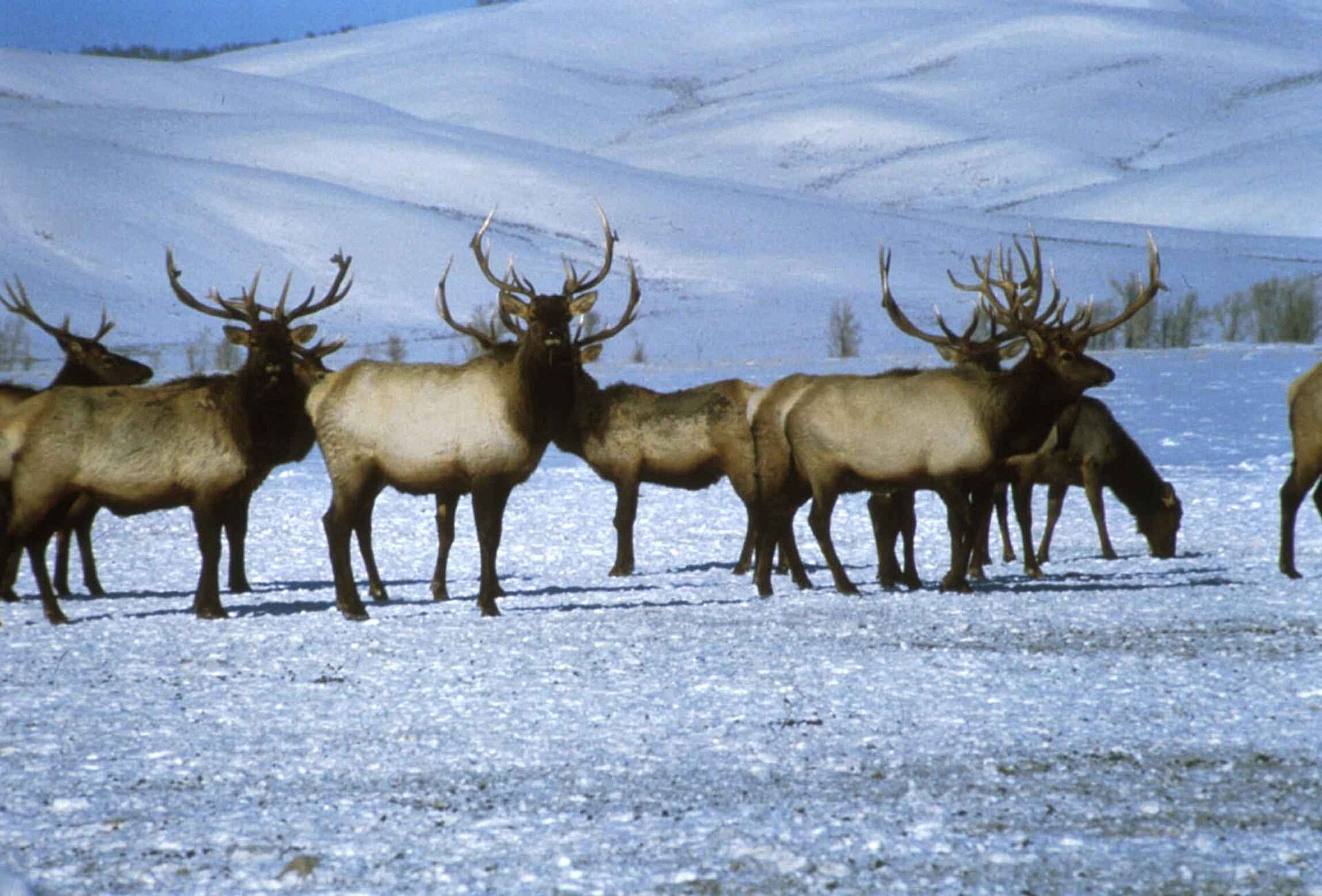
Bull elk on snow. Glen Smart, U.S. Fish and Wildlife Service. Public domain.
What the slope is doing
Cool air is heavier. When a slope loses heat, the air against it gets dense and slides downhill. Meteorologists call that a katabatic wind when the slope itself is doing the cooling, and a drainage wind when that cold air is running down a slope or down a valley into the low spots: frost hollows, creek bottoms, the floor of a basin. After the sun heats a bare slope, the air against it gets light and climbs. That uphill flow is an anabatic wind.
That is the daily argument in elk country. Down in the dark and the early cold. Up once a face actually warms. Down again when the ground gives the heat back. It is a pattern. It is not a clock, and a north face still in shade does not switch just because the sunny side across the drainage already did.
Snow and water keep their own air
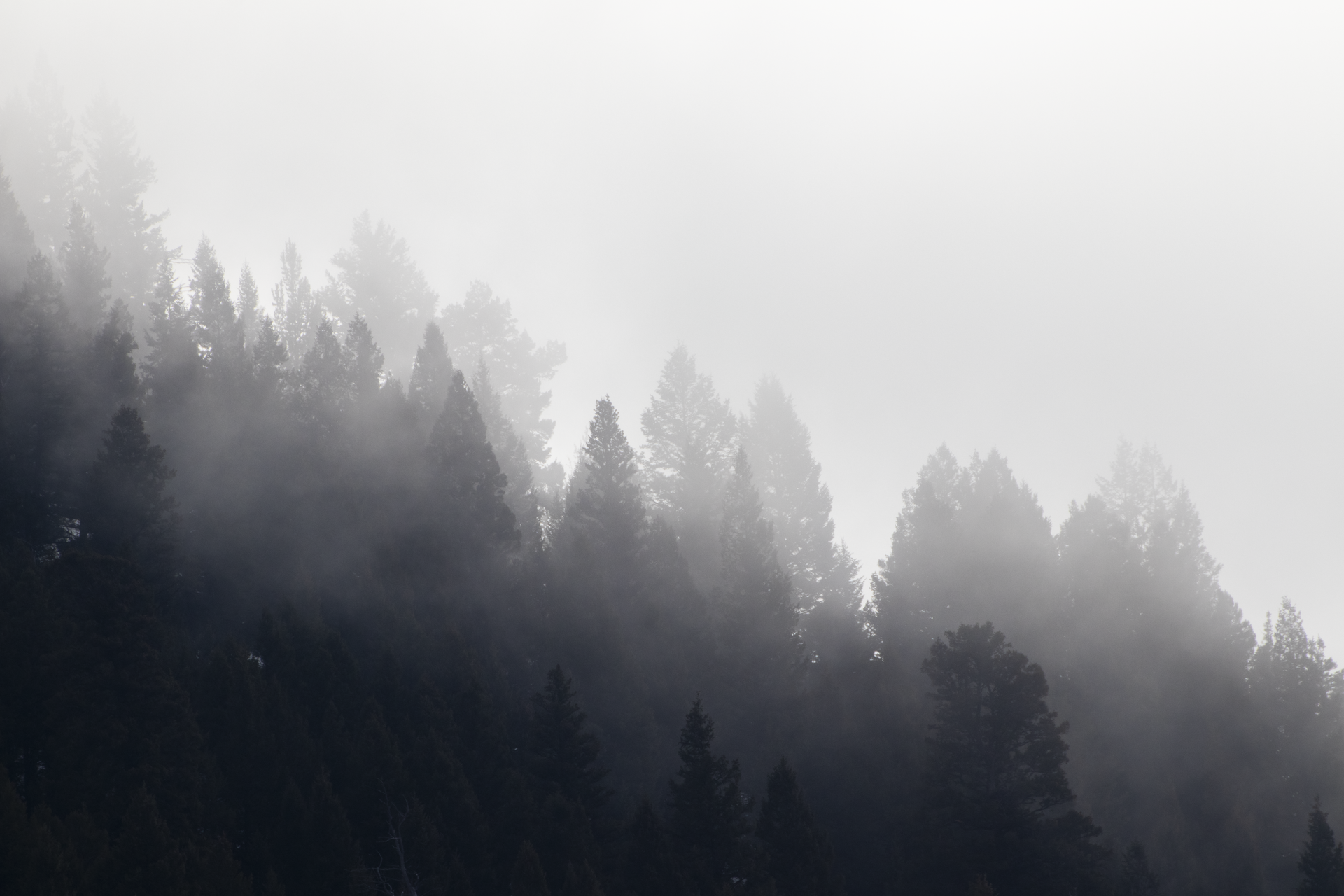
Cold fog on the National Elk Refuge. Kari Cieszkiewicz, U.S. Fish and Wildlife Service. Public domain.
A snowfield is a cold surface. The glossary is plain about this: katabatic flow is not only a nighttime trick. Ice and snow keep cooling the air on top of them, which is why a glacier can blow downhill in the middle of the day. Unmelted snow on a bench does the smaller version of that job. The bare ridge next to it may already be sending air uphill while the snow is still draining cold air down its edge.
Water collects the drain. Cold air runs downvalley the way it runs downslope, and it pools in the bottoms. A creek, a lake, a snow-fed seep: that is a place the heavy air wants to sit. Walk the bottom at the wrong hour and you are standing in the gutter the mountain uses to move scent.
The swirl is the argument, not a mood
The messy part is where those flows meet. A sunny face rising, a snow edge still falling, a creek pulling air down the cut. Cooler air bumps a warmer pocket and the direction quits meaning one thing. The Rocky Mountain Elk Foundation describes that midday bounce in open timber, and the opposite case: a cliff or a deep gorge can grab the air and send it one way while the rest of the mountain is shrugging. Elk like the steady version. They bed where they have command of the wind, not where a surprise draft shows up every few minutes.
They are using the swirl the way you wish you were. Nose into the flow that reaches them. Eyes on the open. A way out when the story changes. Your job is not to announce that an elk is on a coordinate. Your job is to notice which surface is still cold, which one has switched, and whether your powder agrees. If the powder spins, you are in the meeting place. Back up. The knees can have that ridge tomorrow.
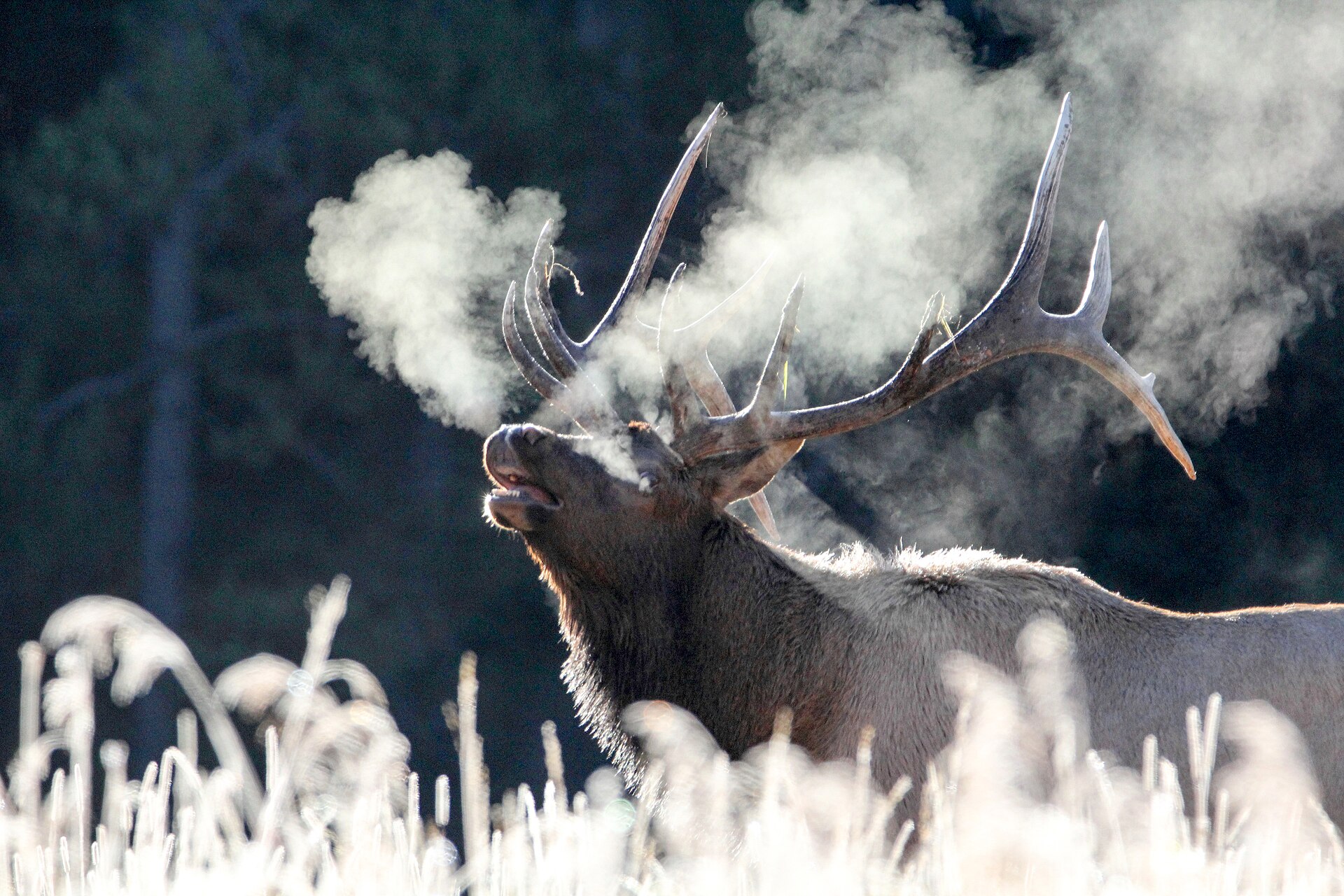
Bull elk on a frosty morning, Yellowstone. Eric Johnston, National Park Service. Public domain.
Sources
- American Meteorological Society, katabatic wind. Downslope flow from a cooling slope, including cold surfaces such as ice and snow.
- American Meteorological Society, drainage wind. Cold air running downslope and downvalley into lower ground.
- Australian Bureau of Meteorology, glossary. Anabatic wind: an uphill wind from heating on a slope.
- Rocky Mountain Elk Foundation, “Make the Wind Your Friend.” The daily rise and fall, midday swirl in open timber, terrain that funnels air, and elk bedding where they command the wind.